Menu

Physical and Thermo-Mechanical Characterization

Physical and thermomechanical characterization of ceramic and composite materials is essential to accurately predict performance under real operating conditions. Advanced physical analysis techniques enable the determination of key parameters such as density, porosity, microstructure, and phase distribution—critical factors influencing material quality, reliability, and durability.

Thermomechanical testing evaluates material behavior as a function of temperature and applied loads, providing data on properties such as coefficient of thermal expansion (CTE), elastic modulus, mechanical strength, creep resistance, and dimensional stability. By integrating these datasets, it is possible to establish clear correlations between microstructural features and in-service performance, supporting product development, process optimization, and material qualification for high-demand applications.
Granulometro

Physical characterization

Galbadini

Mechanical Characterization

Thermal Characterization

Close

Physical characterization


Physical characterization allows for the analysis of the physical properties of materials, such as:

  • Theoretical and real density
  • Porosity
  • Loss on ignition
  • Particle size distribution

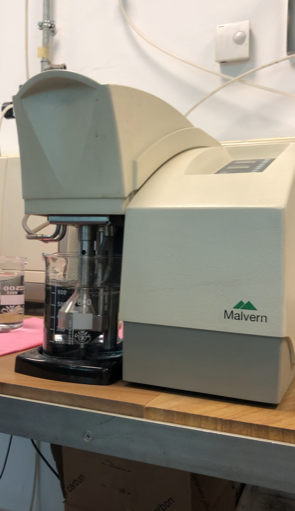
Petroceramics is equipped with numerous analytical balances and techniques that enable the analysis of density and porosity using the Archimedes method. Additionally, we have a muffle furnace for loss on ignition analysis and a laser granulometer for analyzing the particle size distribution of materials.


Grain Size Distribution Analyzer

Granulometro
Size range0.02-2000µm
Accuracy<1%
Reproducibilityvariation <1%

Close

Mechanical Characterization


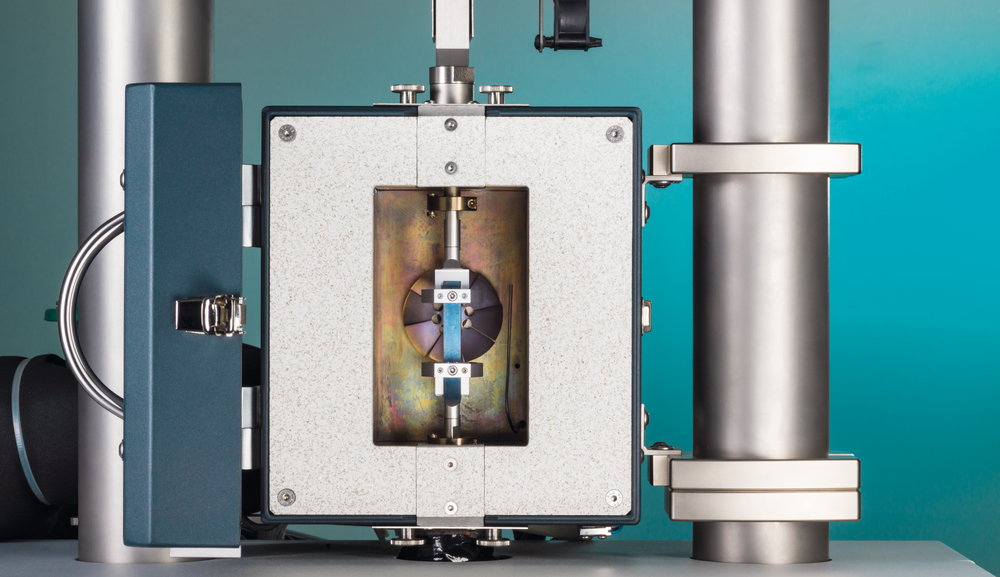
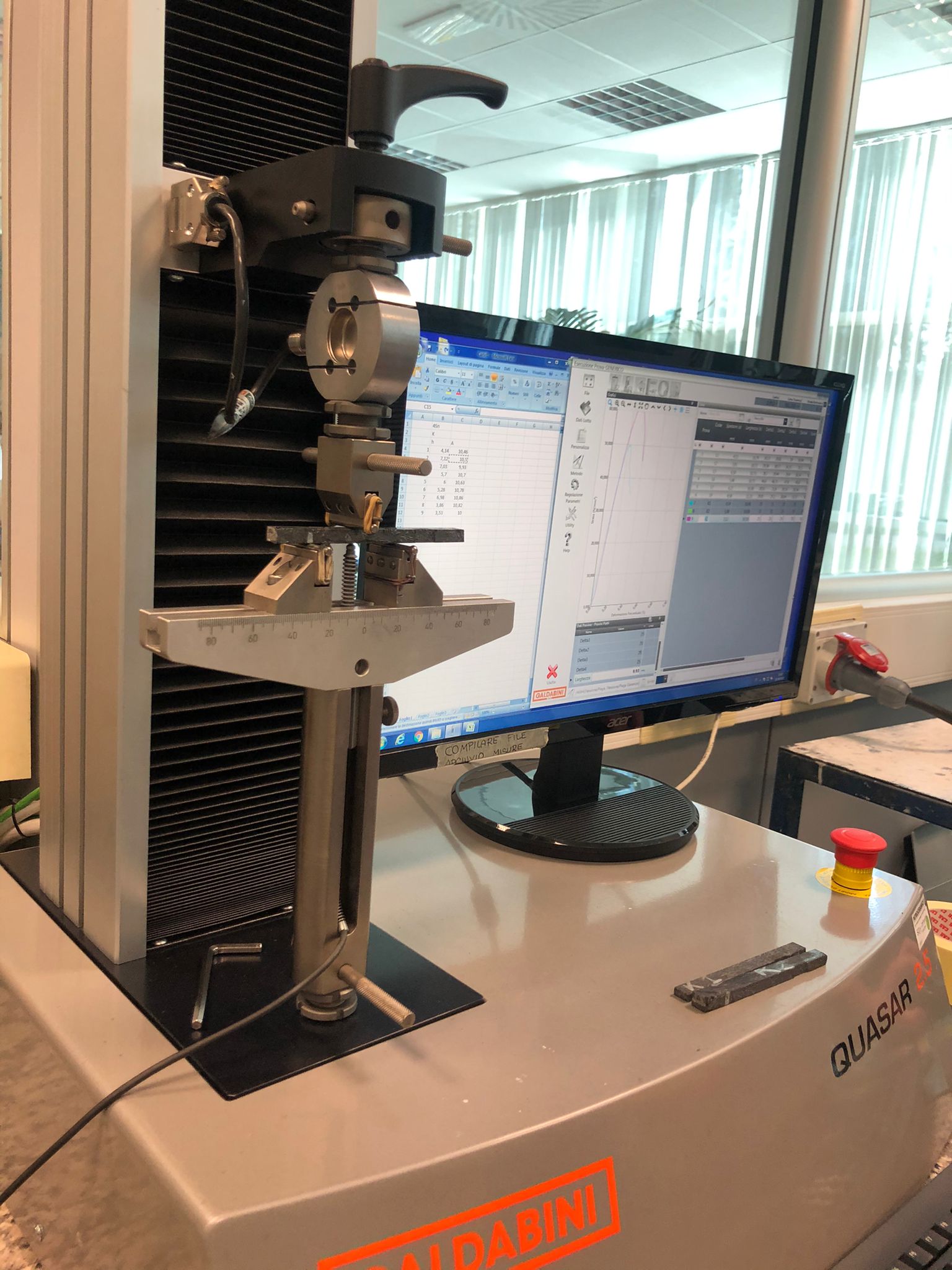
Petroceramics’ analytical laboratory is equipped with a device for three-point bending resistance testing and a machine for Dynamic Mechanical Analysis (DMA).

Mechanical characterization of materials through three-point bending and DMA allows for the evaluation of elastic and viscoelastic properties.

Three-point bending, according to ASTM D790 and ISO 178 standards, measures the flexural modulus and the breaking strength by applying a load at the center point of a sample supported at both ends.

DMA, on the other hand, applies an oscillating stress to determine the storage modulus (E’), loss modulus (E”), and damping factor (tan δ), providing insights into the material’s behavior as a function of temperature and frequency. These techniques are crucial for designing components with optimal performance across various industrial sectors

Dynamometer

Galbadini
Maximum load2.5kN
Flexural test
SamplesSection area 40-100mm2
Span0-1000mm
Working speed0.0005÷1000 mm/min
Displacement resolution0.081 micron
AccuracyClass 1 ISO 7500-1
Reference standardISO 10545-4:2004

Dynamic Mechanical Analyzer

DMA
Types of loadCompression, Tension, 3-Point Bending and Dual Cantilever
Maximum temperature500 °C
Force Range± 500 N
Dynamic Strain± 1 mm to 1,5 mm
Static Strainup to 35 mm
Frequency Range0,01 – 100 Hz
tan δ 0,0001 – 100

Close

Thermal Characterization


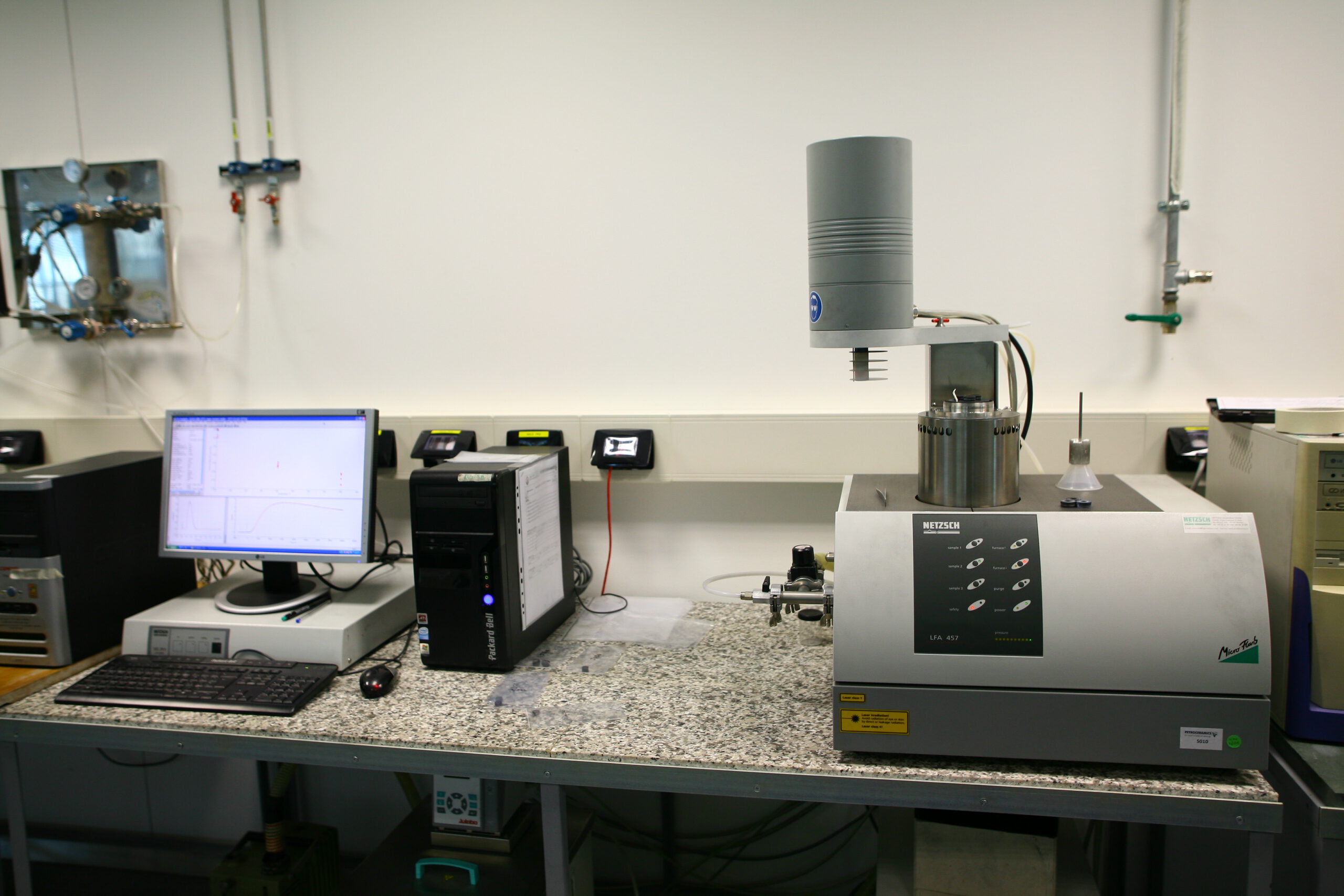
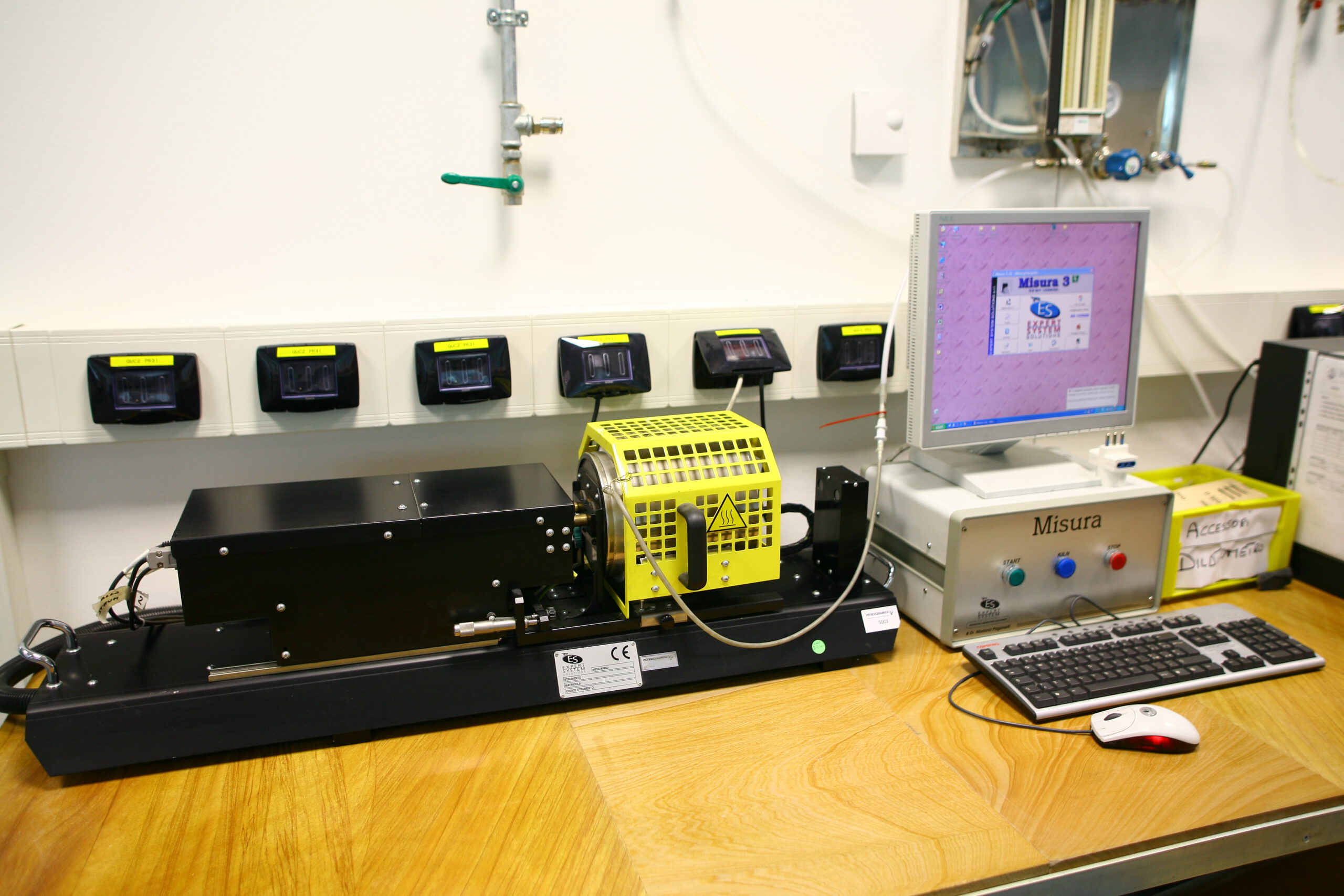
Petroceramics’ analytical laboratory is equipped with a device for thermal diffusivity and conductivity analysis (Laser Flash Analysis) and an optical dilatometer.

Thermal conductivity is the ability of a material to transfer heat, while the coefficient of thermal expansion indicates how much a material expands with an increase in temperature.

Both properties are crucial when selecting materials for high-temperature applications or environments with variable thermal conditions, as they directly influence the performance, durability, and safety of the final product.

Thermal conductivity and diffusivity

Heating rangeRT-1200°C
Heating rate0.01-30°C/min
Temperature resolution0.1°C
Sample dimension45x5x5mm
Precision (K-1)0.05·10-6
Reference standardUNI EN ISO 10545-8

Optical dilatometer

Dilatometro
Heating rangeRT-1100°C
Heating rate0.01-50°C/min
Samplescylinders of ? 12,7 or 25.4mm, thickness 1-10mm
Measurement range0.01-1000mm2/s (thermal diffusivity)
Measurement range0.1-2000W/(m·K) (thermal conductivity)
Reference standardASTM E-1461